Recovering money from a Korean debtor is an enforcement problem, not a letter-writing one.
We start by finding out what the debtor actually owns and whether it is worth pursuing — at our cost. Then demand, payment order or suit, and attachment of what we found. Our fee comes out of what we recover.
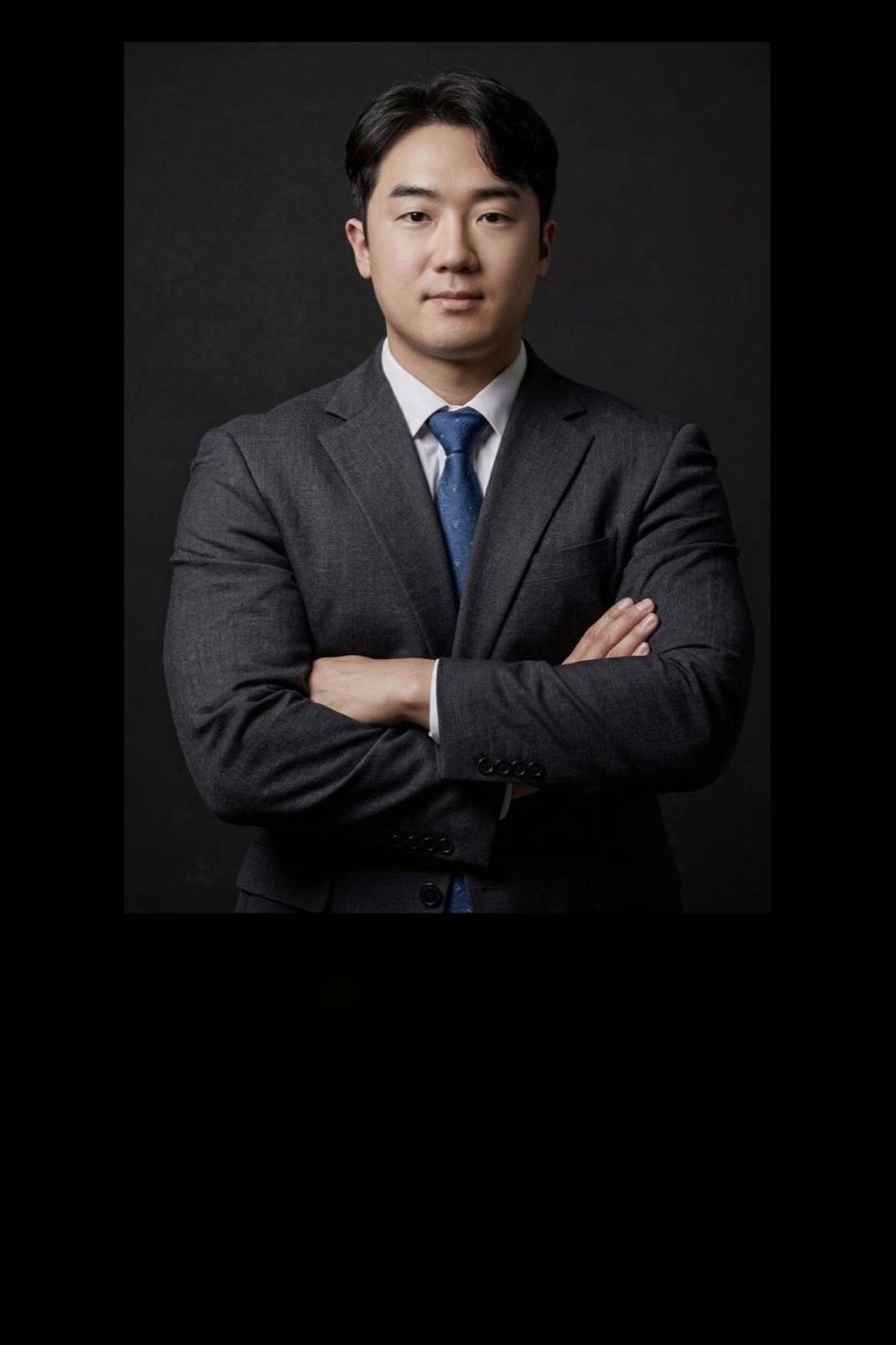
Leviathan Law Office in Gangnam, Seoul. Attorney of record Hyunseo Lim, whose civil enforcement practice covers several hundred auction, attachment and garnishment matters, and clients from Hong Kong, India, the United Kingdom, the United States, Norway and the Netherlands.
Korean debtors do not sit still, and neither does the clock.
Two things run against a foreign creditor in Korea. The first is limitation: a commercial claim generally prescribes five years after it becomes due, and only court action reliably interrupts it. The second is asset flight — once a debtor knows a claim is coming, the bank balance moves, the company car is sold and the receivables are assigned. That is why we investigate first and, where there is something to hold, ask the court to freeze it by provisional attachment before the debtor is ever served with a complaint.
STAGE 1Credit & asset investigation
STAGE 2Attorney demand
STAGE 3Provisional attachment
STAGE 4Payment order or suit
STAGE 5Attachment & collection
Who this is for
Three kinds of creditors end up on this page.
01
Exporters and suppliers with unpaid invoices
You shipped, the Korean buyer accepted, and the payment never arrived. Emails are answered with promises or not at all. You need to know whether the company still has assets before you spend anything on a lawyer.
02
Holders of a judgment or arbitral award
You already won abroad, and the assets are in Korea. Korea is a party to the New York Convention, but a foreign judgment or award is not self-executing here — it needs an execution judgment from a Korean court first.
03
Credit managers, collection agencies and foreign law firms
You handle the file and need Korean local counsel who will run the investigation, take the matter through the courts under a power of attorney, and report in English on a schedule you can pass to your own client.
How a collection runs
Four stages. You decide at the end of each one.
Nothing moves to the next stage without your instruction. Statutory default interest runs at 12% per annum from service of the complaint, so a debtor who stalls in litigation pays for the delay.
Days 1–5
Credit and asset investigation — free
From the debtor's name and registration number we pull the corporate registry, the financial statements on file, the real estate register for any property in the company's or the representative's name, and any record of existing attachments, auctions, tax liens or insolvency filings. You get a written read on whether there is anything to collect against before you have paid us anything.
Weeks 1–4
Attorney demand and negotiation
A demand on law firm letterhead, served by certified mail with content confirmation so that the date and wording are provable later, followed by telephone and messenger contact with the representative, a site visit where it is useful, and a written payment schedule if the debtor engages. Most debtors that still have a business to protect settle at this stage.
Weeks 4–12
Provisional attachment, then payment order or suit
Where the investigation found an asset, we apply to freeze it first. Then the cheap route where it fits: a payment order costs a tenth of the stamp duty of an ordinary suit and becomes enforceable if the debtor does not object within two weeks. A debtor who does object, or who has a real defence, goes to an ordinary civil suit.
After judgment
Enforcement against what we found
Attachment and collection orders over bank deposits, receivables and insurance proceeds; auction of real estate; seizure of movables and vehicles; attachment and sale of unlisted shares. Where the debtor claims to have nothing, we use asset disclosure, a court asset search across banks and registries, and entry in the register of defaulters.
Fees
No cure, no pay. The investigation is on us.
Our collection fee is contingent: it is charged as a percentage of what is actually recovered, not of what is claimed. The initial desktop credit investigation is free. Litigation carries a court-cost layer that is separate from the contingency fee, and the retainer within it is credited back against the fee when the money comes in.
Standard contingency rates
Stage
Rate
What it covers
Amicable recovery, under USD 20,000
20%
Written demand, telephone and messenger contact, site visit, negotiated payment schedule. Charged on sums received.
Amicable recovery, USD 20,000 and above
15%
Standard rate for larger trade receivables and loan claims. Same scope as above.
Bulk and small-balance portfolios
10%
For volume placements and standing partnerships. Out-of-court scope; court proceedings are quoted separately.
Litigation and enforcement
25%
Ordinary civil proceedings and post-judgment enforcement. Individually negotiable for large or portfolio matters.
Court costs and retainer, where litigation is needed
Payment order retainer
approx. USD 500Credited in full against the contingency fee on recovery.
Civil suit retainer
approx. USD 1,800–2,000Varies with the amount claimed and the complexity of the matter.
Court stamp duty
approx. 0.45% of the claimA payment order is charged at one tenth of that — approx. 0.045%.
Service fee
from approx. KRW 62,400Twelve services in a two-party payment order; scales with parties and rounds of service.
Seizure of movables
approx. USD 500Execution officer's fee, appraisal and related out-of-pocket costs.
Court costs and the retainer are separate from the contingency fee. After a win they can be claimed back from the debtor through a costs determination order. Recognition and enforcement of a foreign judgment or arbitral award is a separate paid service and is quoted on sight of the award and the amount claimed — it is not covered by the collection contingency fee.
What enforcement actually looks like
A judgment is a piece of paper until something is attached.
This is the part most creditors have never seen and the part that decides whether you are paid. Our civil enforcement practice runs to several hundred matters across the following measures, with a substantial record of successful objections and appeals in enforcement proceedings.
Bank deposits and receivables
Attachment and collection orders, and assignment orders, over bank deposits, trade receivables, insurance proceeds, wages, dividends, claims for withdrawal of deposited money and claims against government funds.
Real estate
Compulsory and voluntary auction, provisional attachment before suit, distribution objections where another creditor's claim is inflated, and attachment of claims for transfer of ownership and of pre-sale rights.
Shares and corporate interests
Attachment, sale and assignment orders over unlisted shares and over shares issued before share certificates — often the only real asset in a closely held Korean company.
Movables and vehicles
Seizure and auction of inventory, equipment and vehicles by an execution officer, including on-site seizure at the debtor's premises.
Trust and security interests
Attachment of trust beneficiary rights, secured claims and patents, and enforcement of pledges over trust beneficiary rights including public auction.
When the debtor says there is nothing
Court-ordered disclosure of assets, an asset search across banks, insurers and registries, and entry in the register of defaulters — which reaches the debtor's own credit standing and tends to produce payment on its own.
Holding the position
Injunctions against transfer of possession and against disposal, indirect compulsion, substitute execution and delivery execution, so that an asset is still there when the enforcement lands.
Defending the recovery
Objections and appeals in enforcement matters, opposition to inflated competing claims, and action against a debtor who has moved assets to defeat execution.
Cross-border
Foreign judgments and awards need a Korean court first.
Arbitral awards
Korea is a party to the New York Convention, so a foreign arbitral award can be recognised and enforced here. It is not automatic: enforcement requires an execution judgment from a Korean court, and that action is separate from the collection itself.
Foreign court judgments
A judgment from your own courts can be enforced in Korea once a Korean court has confirmed that the statutory recognition requirements — jurisdiction, proper service, no conflict with Korean public policy, and reciprocity — are met.
Quoted separately
Because recognition proceedings are their own litigation, they sit outside the collection contingency fee. We quote them once we have seen the award or judgment and the amount claimed, and we say up front what we think the Korean court will ask about.
We have acted for creditors based in Hong Kong, India, the United Kingdom, the United States, Norway and the Netherlands in domestic Korean recovery, and set up Korean branches for foreign entities that decided to keep doing business here after the dispute was resolved.
Who handles your file
Three people, no case handlers between you and them.
Attorney of record
Hyunseo LimManaging Attorney
Several hundred disputes across civil, criminal and corporate litigation, including civil enforcement and special debt recovery matters worth hundreds of billions of won.
A hands-on lawyer who has run businesses himself across finance, media, real estate, services and entertainment, and who led the first project in Korea to bring an AI-based real estate assessment system into the financial sector — work recognised with ministerial awards from both the Ministry of Science and ICT and the Ministry of SMEs and Startups. Since winning the grand prize in the criminal division of the Gain Moot Court Competition he has practised as a principal. His recovery work includes domestic collection for creditors from Hong Kong, India, the United Kingdom, the United States, Norway and the Netherlands, recovery of mortgage loan receivables for financial institutions, and enforcement of pledges over trust beneficiary rights.
EDUCATION
Seoul National University School of Law, J.D. · SNU BBA · Daewon Foreign Language High School (Chinese)
ADMISSION
Attorney-at-Law, Republic of Korea · Licensed Real Estate Agent
Eleven years and ten months commanding in the field before the law, and tax appeals and corporate advisory work after it.
A graduate of the Korea Military Academy who was selected for the study-in-Germany programme open only to a very small number of top cadets, majoring in German Area Studies. He commanded as a GOP outpost commander, reconnaissance platoon leader and mechanised infantry company commander, completed the German battalion commanders' course, studied at the KDI School of Public Policy and Management, and retired as a captain after serving as brigade operations officer. He then qualified through Inha University Law School on a full scholarship and practised tax appeals and corporate advisory work at a tax firm.
EDUCATION
Inha University Law School, J.D. (full scholarship) · Korea Military Academy, German Area Studies
A former senior examiner at Korea's Financial Supervisory Service, for the cases where the debtor is a financial institution or the asset sits inside one.
As a senior examiner at the Financial Supervisory Service he supervised and examined the banking sector and took charge of reviewing and improving lending regulation such as LTV and DSR, examining the adequacy of financial institutions' internal controls under the Capital Markets Act and the Financial Consumer Protection Act. He handled agreements and liaison with international bodies including IOSCO and IAIS, responded to the IMF and AMRO annual consultations, and attended insurance supervision training run by BaFin. Before the FSS he underwrote contract, defect and advance-payment guarantees at the Korea Specialty Contractors Financial Cooperative.
EDUCATION
Korea University, BA in International Studies
BACKGROUND
Senior Examiner, Financial Supervisory Service · Korea Specialty Contractors Financial Cooperative
We would rather tell you in week one that the company is empty than bill you for two years of litigation against a shell.
Hyunseo Lim, Managing Attorney
Questions we are asked first
Before you send us anything.
What does the free credit investigation actually cover?
A desktop investigation from public and subscription records: the corporate registry, filed financial statements, the real estate register for property held by the company or its representative, and any record of existing attachments, auctions, tax liens or insolvency proceedings. It tells you whether the debtor has something worth attaching. It is not a physical asset trace, and it does not include anything that would require a court order — that comes later, once proceedings are on foot.
What do you need from me to start?
The debtor's exact name and, if you have it, the corporate registration number; the contract or purchase order; the invoices and any delivery or acceptance record; the correspondence in which the debt was acknowledged or disputed; and the amount and currency claimed, with the date it fell due. If you already have a judgment or arbitral award, send that as well.
How long does a Korean collection take?
The amicable stage runs two to four weeks. An unopposed payment order is typically enforceable within roughly two months of filing. A contested ordinary suit at first instance generally runs several months to about a year depending on the court's docket and the evidence, and enforcement follows judgment. We tell you what the docket looks like rather than promising a date.
Can the debtor just move the money before you get there?
That is the ordinary risk, and it is why we investigate before we write. Where the investigation identifies an asset, we can apply for provisional attachment to freeze it before the debtor is served — which normally requires a bond or cash deposit with the court. Moving assets specifically to defeat execution is also a criminal offence in Korea, which is sometimes the more persuasive point.
Is there a deadline I have already missed?
A commercial claim in Korea generally prescribes five years from when it became due, with shorter periods for certain claim types and ten years for ordinary civil claims. Filing suit interrupts the period; a demand letter on its own gives you only a short extension. If your invoice is approaching five years old, treat it as urgent and send it to us before anything else.
I already have an arbitral award. Is that enough?
Korea is a party to the New York Convention, so your award can be enforced here — but not directly. A Korean court has to grant an execution judgment first, and only then does enforcement against assets begin. That recognition action is separate from the collection and is quoted separately, once we have seen the award and the amount claimed.
What exactly do I pay, and when?
The investigation is free. Amicable recovery is charged at 15% or 20% of what is received depending on whether the claim is above or below USD 20,000, and only on sums actually received. Litigation and enforcement are charged at 25% of recoveries, with court stamp duty, service fees and execution costs on top as disbursements, plus a retainer of roughly USD 500 for a payment order or USD 1,800 to 2,000 for an ordinary suit — and that retainer is credited back against the contingency fee when the money comes in.
What if the debtor has genuinely gone under?
Then you should hear it early. If a rehabilitation or bankruptcy filing is already on the record, the honest answer is often to file a claim in that proceeding rather than to litigate, and we say so. We also act in insolvency matters — creditor bankruptcy petitions, claim determination proceedings and defence of avoidance claims — so the file does not have to change hands.
Free credit investigation
Tell us who owes you what. We will tell you if it is collectable.
Send the debtor's details and the amount. You will hear back within one business day, Seoul time, with what the registry shows, what we would do first, and what it would cost. No charge for the assessment.